Introduction
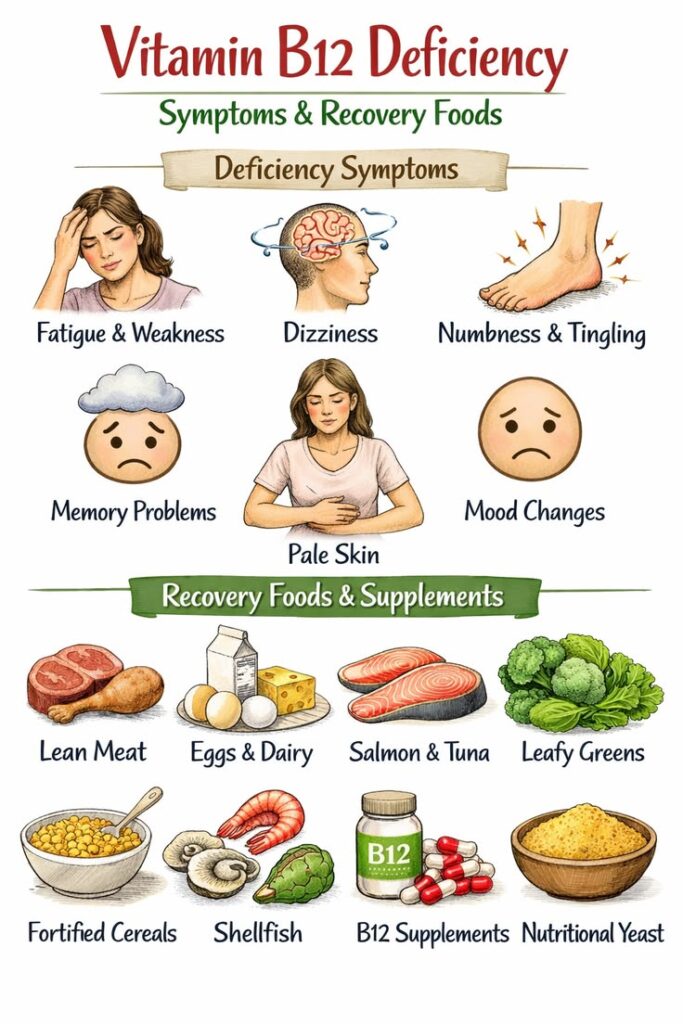
Vitamin B12 deficiency symptoms often go unnoticed until they begin to affect daily life. From fatigue and brain fog to tingling sensations and mood swings, many people experience these issues without realizing that a simple nutrient deficiency could be the root cause.
In countries like India, where dietary habits and lifestyle patterns can increase the risk, Vitamin B12 deficiency is one of the most common yet overlooked health concerns.
When your vitamin B12 levels are low, it doesn’t just make you feel slightly weak. It can impact your energy levels, brain function, nerve health, and even your mental well-being.
In this detailed guide, we’ll cover everything you need to know:
- What Vitamin B12 does in your body
- What happens when it drops
- 12 common warning symptoms
- Causes and risk factors
- Best ways to fix and prevent deficiency
What Is Vitamin B12?
Vitamin B12, also known as cobalamin, is a water-soluble vitamin that plays a critical role in maintaining overall health.
Unlike some nutrients, your body cannot produce vitamin B12 on its own. That means you must get it from food or supplements.
Key Functions of Vitamin B12
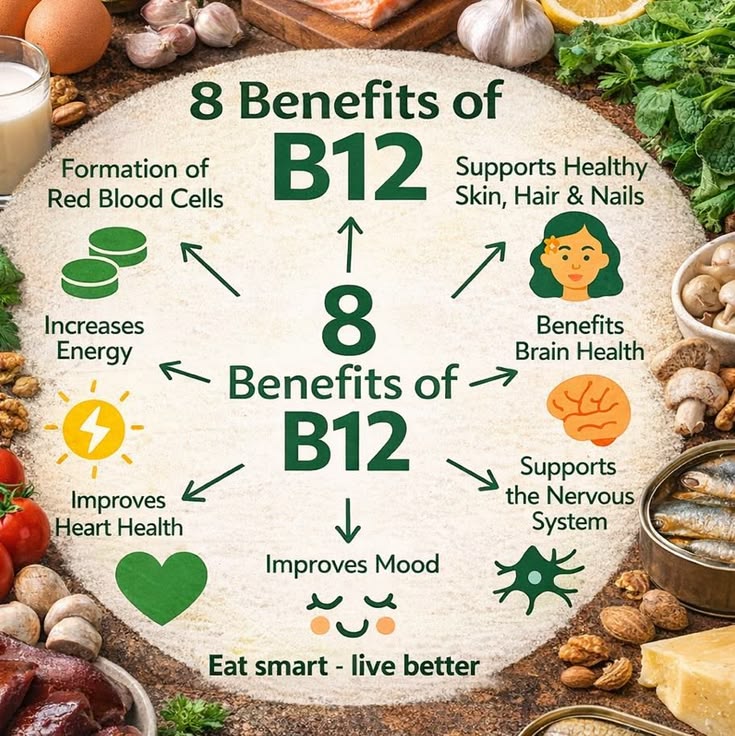
1. Red Blood Cell Formation
B12 helps in producing healthy red blood cells that carry oxygen throughout your body.
2. Brain and Nervous System Health
It supports nerve function and helps maintain the protective covering around nerves (myelin sheath).
3. DNA Synthesis
It plays a role in creating DNA, which is essential for cell growth and repair.
4. Energy Production
While B12 doesn’t directly give energy, it helps convert food into usable energy.
What Happens If Vitamin B12 Is Low?
When your vitamin B12 levels drop, several systems in your body begin to slow down or malfunction.
1. Reduced Oxygen Supply
Low B12 leads to fewer red blood cells, which reduces oxygen delivery to tissues.
2. Nerve Damage Begins
Without B12, nerve protection weakens, leading to tingling and numbness.
3. Brain Function Declines
Memory, focus, and mental clarity start to suffer.
4. Increased Risk of Chronic Issues
Long-term deficiency can lead to serious neurological and psychological problems.
12 Common Symptoms of Vitamin B12 Deficiency
Let’s break this down into early, moderate, and severe symptoms.
Early Symptoms (Often Ignored)
1. Constant Fatigue and Low Energy
This is usually the first sign.
You may feel:
- Tired even after 7–8 hours of sleep
- Sluggish throughout the day
- Unable to stay productive
Why it happens:
Low red blood cells = less oxygen = less energy.
2. Weakness and Body Heaviness
Simple tasks may feel exhausting.
You might notice:
- Muscle weakness
- Lack of stamina
- Feeling physically drained
3. Pale or Yellowish Skin
A lack of healthy red blood cells can make your skin look dull or pale.
In some cases, slight yellowing occurs due to breakdown of abnormal cells.
4. Frequent Headaches and Dizziness
Low oxygen circulation affects your brain, causing:
- Lightheadedness
- Headaches
- Balance issues
Moderate Symptoms (More Noticeable)
5. Tingling Sensation (Pins and Needles)
One of the most important warning signs.
Usually felt in:
- Hands
- Feet
- Legs
This indicates early nerve involvement.
6. Numbness in Limbs
If ignored, tingling can turn into numbness.
You may lose sensation in certain areas.
7. Shortness of Breath
Even mild physical activity may leave you breathless.
This happens due to reduced oxygen-carrying capacity.
8. Heart Palpitations
You may feel:
- Rapid heartbeat
- Irregular pulse
This is your body trying to compensate for low oxygen levels.
9. Mouth Ulcers and Swollen Tongue
Vitamin B12 deficiency can affect oral health.
Symptoms include:
- Painful ulcers
- Smooth, red tongue
- Burning sensation
Severe Symptoms (Do Not Ignore)
10. Memory Loss and Brain Fog
You may experience:
- Forgetfulness
- Slow thinking
- Difficulty focusing
Many people confuse this with stress or aging.
11. Mood Changes and Depression
B12 plays a role in brain chemistry.
Low levels can cause:
- Irritability
- Anxiety
- Depression
12. Difficulty Walking and Balance Problems
Nerve damage affects coordination.
You may notice:
- Unsteady walking
- Poor balance
- Frequent stumbling
13. Vision Problems
In rare cases, deficiency affects the optic nerve.
This may cause:
- Blurred vision
- Visual disturbances
Causes of Vitamin B12 Deficiency
Understanding the cause is key to fixing the problem.
1. Poor Dietary Intake
The most common cause, especially in:
- Vegetarians
- Vegans
B12 is mainly found in animal-based foods.
2. Absorption Issues
Even if you eat enough B12, your body may not absorb it properly.
This can happen due to:
- Low stomach acid
- Digestive disorders
- Intestinal problems
3. Age-Related Decline
As people age, the body’s ability to absorb B12 decreases.
4. Medications
Certain medicines reduce B12 absorption, such as the following:
- Antacids
- Metformin (used for diabetes)
5. Alcohol Consumption
Excess alcohol affects nutrient absorption and damages the digestive system.
6. Medical Conditions
Conditions like:
- Gastritis
- Crohn’s disease
- Celiac disease
can interfere with absorption.
Who Is at High Risk?
You should be extra careful if you fall into these groups:
- Vegetarians and vegans
- People above 50 years
- Diabetic patients on medication
- Individuals with digestive disorders
- People with poor diet habits
How Vitamin B12 Deficiency Is Diagnosed
A simple blood test can confirm a deficiency.
Common Tests Include:
- Serum Vitamin B12 test
- Complete Blood Count (CBC)
- Homocysteine levels (in some cases)
Best Ways to Fix Vitamin B12 Deficiency
The good news is that it is highly treatable.
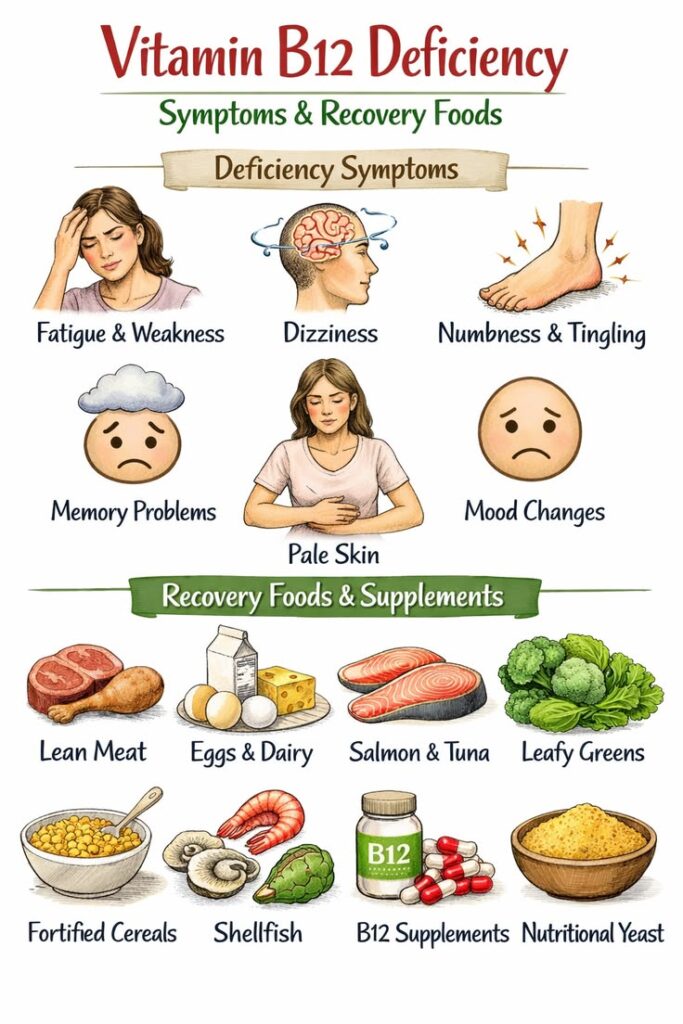
1. Improve Your Diet
B12-Rich Foods
Animal-Based Sources
- Eggs
- Chicken
- Fish
- Milk and dairy products
Vegetarian Options
- Fortified cereals
- Fortified plant milk
2. Take Supplements
Supplements are effective and widely used.
Types include:
- Tablets
- Capsules
- Sublingual tablets
These are especially useful for vegetarians.
3. Vitamin B12 Injections
Recommended in severe cases or when absorption is poor.
Benefits:
- Faster recovery
- Direct absorption
- Effective for nerve-related symptoms
4. Treat the Root Cause
If the issue is due to:
- Medication
- Digestive problems
Then addressing those is important for long-term recovery.
How Long Does Recovery Take?
Recovery depends on severity.
- Mild deficiency: 2–4 weeks
- Moderate: 1–3 months
- Severe: 3–6 months or longer
Energy levels improve quickly, but nerve recovery takes more time.
Long-Term Complications If Ignored
Untreated B12 deficiency can lead to:
- Permanent nerve damage
- Severe anemia
- Cognitive decline
- Mental health disorders
This is why early detection is important.
How to Prevent Vitamin B12 Deficiency
Prevention is simple if you stay consistent.
Practical Tips
- Eat a balanced diet
- Include B12-rich or fortified foods
- Take supplements if needed
- Get regular blood tests
- Limit alcohol consumption
Common Myths About Vitamin B12
Myth 1: Only vegetarians are affected
Reality: Even non-vegetarians can develop deficiencies.
Myth 2: You’ll notice symptoms immediately
Reality: Symptoms develop slowly and silently.
Myth 3: Energy drinks can fix it
Reality: They are not a reliable or healthy solution.
Frequently Asked Questions (FAQs)
Is vitamin B12 deficiency serious?
Yes, if untreated, it can lead to permanent nerve and brain damage.
Can I take B12 daily?
Yes, it is generally safe, but dosage should be as per medical advice.
Which fruit is rich in vitamin B12?
Fruits do not naturally contain B12. You need fortified foods or animal sources.
Can B12 deficiency cause weight gain?
Indirectly, it may affect metabolism and energy levels.
Final Thoughts
Vitamin B12 deficiency is more common than most people realize. The tricky part is that its symptoms often feel like normal tiredness, stress, or aging.
But your body always gives signals.
If you’ve been feeling constantly tired, mentally foggy, or physically weak, it’s worth checking your vitamin B12 levels.
The good part is that once diagnosed, it’s easy to treat and manage. With the right diet, supplements, and awareness, you can recover fully and get your energy and focus back.